
Speech and Language Therapy
For special needs in speech, language articulation challenges, difficulty eating and drinking, and social skills development.
When your child or loved one is diagnosed with a special need in speech or socialization, it’s easy to feel lost trying to understand what it all means. Our Speech Language Pathologists and Assistants are trained in a wide range of specialized areas to treat disabilities and challenges ranging from apraxia and fluency disorders to special cognition needs and conversation skills. We create custom care plans that address each individual’s unique needs in a setting that works best for them.
Questions about a diagnosis?
Reach out and we'll help you understand what it means.

Assessment and Treatment
Evidence-based treatment from our team of speech-language pathologists can improve communication skills and quality of life for children with a variety of disorders including autism, language and voice disorders, and more. Treatment for social challenges include:
Making and keeping friends • Carrying on a conversation • Identifying and expressing feeling • Problem-solving or dealing with confrontation
Questions about a diagnosis?
Reach out and we'll help you understand what it means.
Adult Services
Visit our website: www.sleaconnect.com for more information.
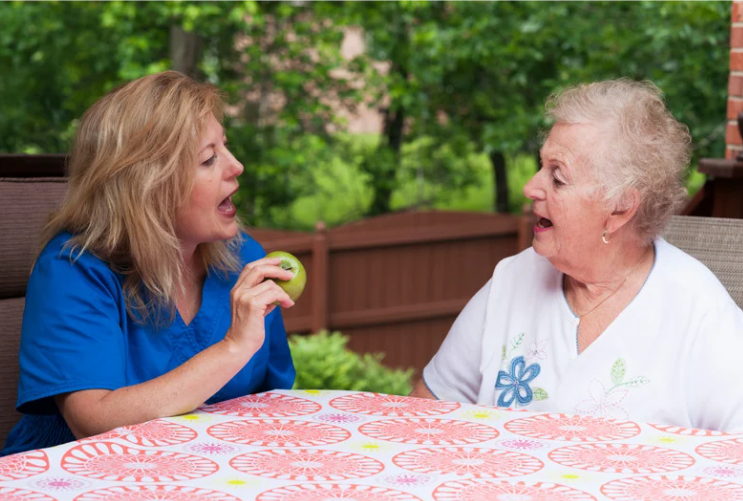
We pride ourselves on delivering personalized, client-centered care that truly stands out. Whether your loved one is recovering from a stroke, adapting after a brain injury, or managing conditions like Parkinson’s or Cerebral Palsy, our dedicated team tailors every intervention to meet their specific needs, fostering independence and enhancing quality of life. We believe in empowering our clients and their families through compassionate support and evidence based strategies that make a real difference.
Our Speech Team Provides Services Addressing the Following:
Aphasia
Dysarthria
Cognitive-Linguistic Communication Disorders (impacting memory, attention, and executive functioning)
Voice Disorders (dysphonia, vocal nodules, others)
Stuttering
Dysphagia (difficulty swallowing)
Velopharyngeal Insufficiency
Speech disorders resulting from surgical or neurological changes
Questions about a diagnosis?
Reach out and we'll help you understand what it means.

Augmentative Alternative Communication
AAC, or Augmentative Alternative Communication, can come in many forms such as pictures, sign language, low tech options, or sophisticated speech generating devices. AAC can help individuals communicate and function independently that are otherwise unable to communicate verbally. It can be individualized to meet the specific needs of our clients and can change as communication improves. We have AAC specialists on site who can assess to determine if AAC is right for you and can also help navigate which type of AAC is best.
Questions about a diagnosis?
Reach out and we'll help you understand what it means.

Meet Our Speech & Language Leadership Team
-
![A woman stands outdoors in a forested area, smiling, wearing a denim jacket, white shirt, pearl earrings, and a leopard-print headband.]()
Baily
Senior Director of Speech and OT Programs
-
![SLEA Therapies Speech and Language Lead Culver City, Torrance.]()
Ellie
Lead Speech & Language Therapist
-
![SLEA Therapies Speech and Language Lead Culver City, Santa Clarita.]()
Karen
Lead Speech & Language Therapist
-
![Sara]()
Sara
Director of Speech School Programs & Business Development


-
Speech therapy can begin as early as infancy. Early intervention - ideally before age 3 -tends to produce the strongest outcomes. If your child isn't meeting milestones such as saying first words by 12 months or using two-word phrases by 24 months, request an evaluation right away. There is no minimum age requirement.
-
Common signs include: not babbling by 12 months, no single words by 16 months, limited vocabulary for their age, difficulty being understood by familiar adults, trouble following simple directions, stuttering, and frustration when trying to communicate. If you have any concern, an evaluation is always the right first step.
-
Progress depends on the child and the nature of their challenge. Some children see meaningful gains within a few months; others benefit from support over one to several years. Your therapist sets individualized goals and reassesses progress regularly, so you always know where your child stands.
-
Speech-language pathologists (SLPs) work on articulation, language comprehension and expression, fluency (stuttering), voice, and social communication. Sessions are play-based for young children and may include games, books, conversation practice, and targeted exercises tailored to your child's specific goals.
-
Yes. Language skills form the foundation for literacy. SLPs work on phonological awareness, vocabulary, and comprehension - skills directly tied to reading. Children with dyslexia or language-based learning differences frequently benefit from speech-language therapy alongside academic support.
-
If you'd like to use your insurance for speech therapy, a physician's referral is needed. Call our office and we will walk you through the process based on your specific insurance plan. If you'd prefer to get started ASAP, we offer private pay contracts, which do not require a physician's referral.
-
Absolutely - and it is very common. Children may receive both services on different days, especially when sensory, motor, or attention challenges affect communication. Our therapists coordinate care so that goals across disciplines reinforce each other.
-
Many health insurance plans cover speech therapy when it is deemed medically necessary. Coverage varies by plan, so we encourage families to call their insurance provider to ask about speech therapy benefits, session limits, and referral requirements. Our team is happy to assist with the process.
-
A speech delay means a child is developing in the typical pattern but at a slower pace than expected. A speech disorder - such as childhood apraxia of speech or a phonological disorder - involves atypical patterns of speech production. Both benefit from professional evaluation and treatment, and both are very treatable.
-
Parent involvement is one of the strongest predictors of progress. Your therapist will provide home activities tailored to your child's current goals. In general: read together daily, engage in back-and-forth conversations, narrate everyday activities, and allow your child time to attempt words before stepping in.


Frequently Asked Questions